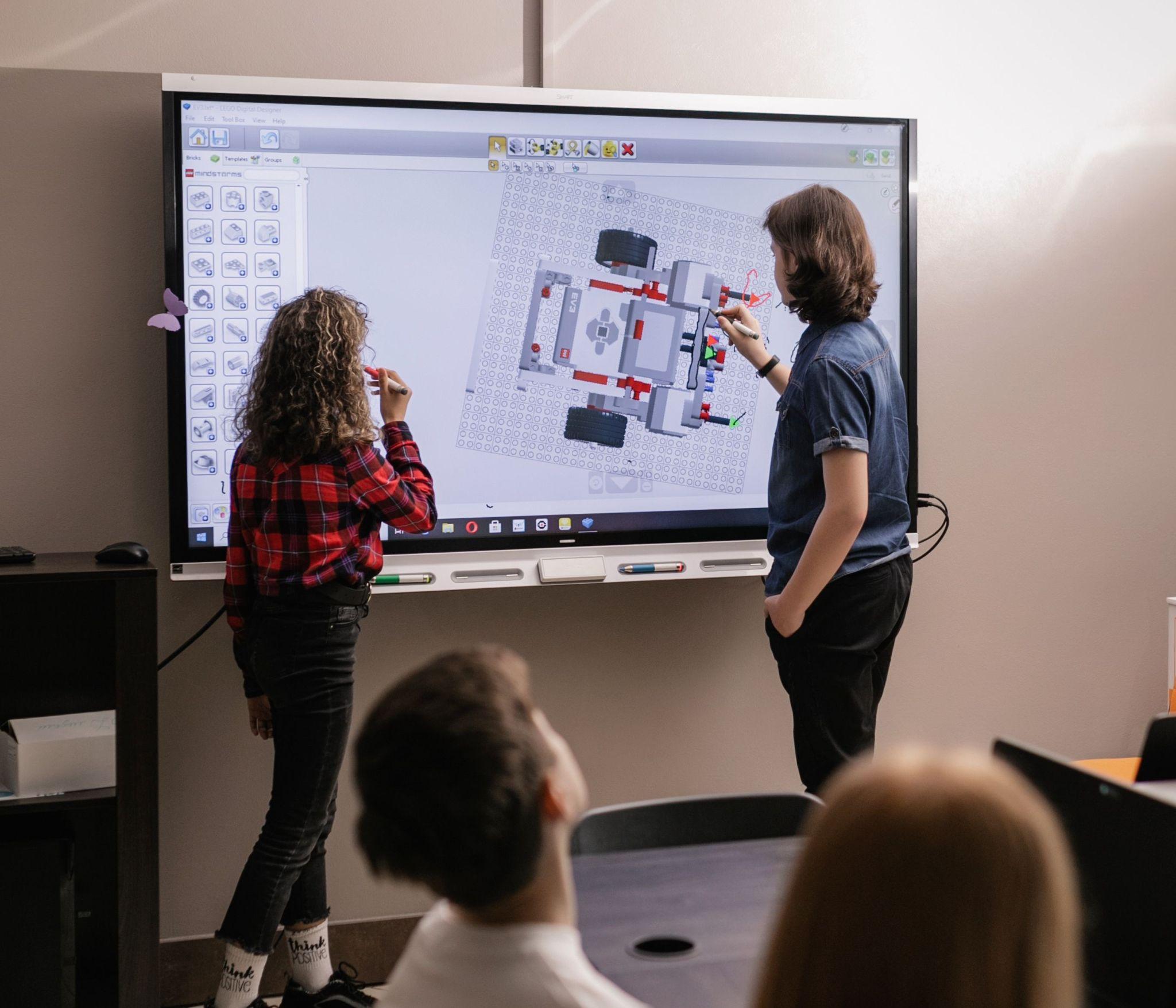
The Founding Question
For most of modern education, the basic equation has remained remarkably unchanged: read, remember, reproduce. But the world students are preparing for is three-dimensional, interconnected and constantly changing. Real problems demand observation, experimentation, reasoning, imagination and the ability to connect one idea to another.
This disconnect between how we teach and how we actually understand the world sits at the heart of the Saras-3D story. Today, Saras-3D describes its mission as creating a learning environment that makes learners think, not just remember. Its current platform combines reasoning-first AI, concept graphs, interactive 3D models, simulations, video and audio to create a more personalised learning experience.
But the idea did not begin with AI. It began with a more fundamental question: What if students could actually interact with what they were trying to learn?
“The real world is in 3D and learning aids are in 2D.”
Bipin Dama, Founder & CTO
The Founders and the Perspective They Brought
Saras-3D emerged from a team whose experience was rooted not in conventional publishing, but in advanced technology, engineering and systems thinking.

Bipin Dama
Founder & CTOAn inventor and engineering leader with deep experience in chip design, systems, software and scalable technology platforms. Saras-3D’s current profile credits him with 38 US patents and experience spanning AANetcom, Lightwire, Cisco, PMC-Sierra, Bell Labs and Larsen & Toubro.

Vijay Albuquerque
CEOA technology executive with more than three decades of leadership across semiconductors, photonics, advanced manufacturing, product development and business strategy, with experience at organisations including Luminar, Corning, Lightwire and Agilent/HP.

Kashyap Mankad
Founding member / senior adviserA former Group Director at ISRO’s Space Applications Centre, he brought a systems-oriented view of science, interdisciplinary thinking and a commitment to widening access to high-quality education.
The founders were therefore able to approach education from an engineering question: could technology change the way a learner experiences knowledge, rather than merely digitising the way knowledge is delivered?
The World Is 3D. Why Is Learning Mostly 2D?
A diagram of the human heart is not the heart. A photograph of a molecule is not the molecule. A textbook drawing of a projectile cannot let a learner alter its trajectory and observe the result. Static illustrations can show what something looks like; interaction can help reveal why it behaves the way it does.
Saras-3D’s early work therefore centred on interactive stereoscopic 3D experiences in which students could manipulate virtual objects, explore simulations and experience concepts rather than simply read about them. Its Genius 3D Learning system brought together 3D simulations, lectures, quizzes and virtual laboratory experiences.
This was the beginning of a larger idea: learning by doing.
From Seeing to Doing
Traditional digital education often digitises the textbook: a PDF replaces the printed page, a video replaces the lecture, and a multiple-choice quiz replaces the worksheet. Saras-3D’s founders were interested in something more ambitious — using technology to create experiences rather than merely deliver content.
In interactive physics, chemistry, biology and mathematics environments, the learner can manipulate variables, rotate models, test assumptions and observe outcomes. The educational shift is simple but profound: do not only tell a learner what happens; let the learner change something and discover why it happens.
“We are offering a virtual lab experience with infinite permutations for better understanding of the concepts.”
Kashyap Mankad, founding member
Engagement Is Not the Same as Understanding
The founders were not simply trying to make education more entertaining. The objective was to make it more intellectually active. Bipin Dama has argued that pedagogy dominated by rote memorisation may deliver short-term academic outcomes without necessarily cultivating the critical and analytical thinking needed to produce future STEM thinkers and innovators.
That distinction remains central to Saras-3D’s philosophy. The question is not only, ‘Can the student get the right answer?’ It is also, ‘Does the student understand why the answer is right?’ — and eventually, ‘Can the student use that understanding somewhere else?’
A Vision Bigger Than 3D
3D was never the destination. It was a means to an end. The broader ambition was to help create problem-solvers and innovators. In an IEEE programme description, Saras-3D articulated a vision of using technology to spark interest in science and mathematics and encourage the development of innovators and problem-solvers.
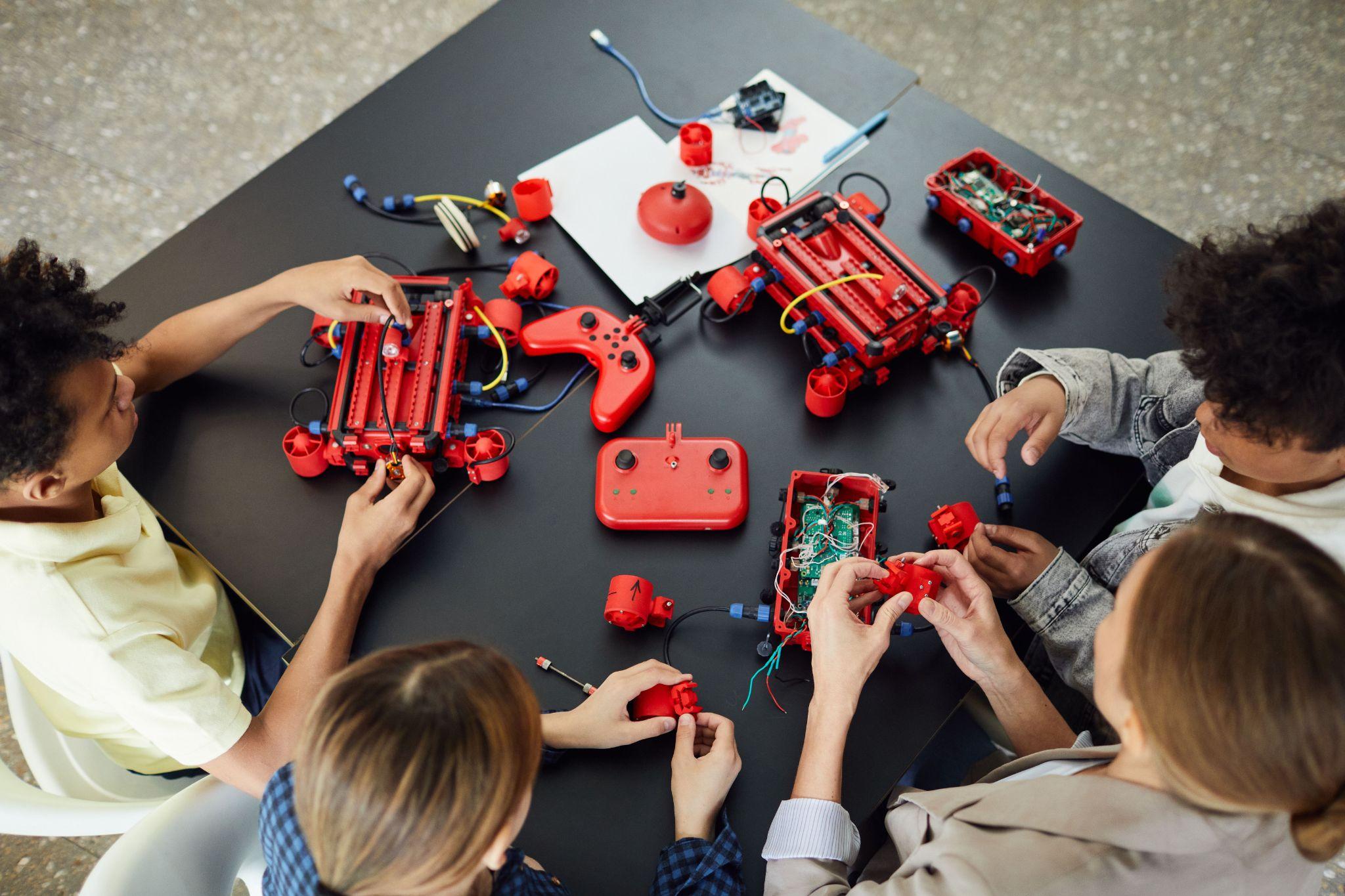
Seen this way, Saras-3D was never simply about putting more technology into education. It was about using technology to cultivate a different kind of learner: curious rather than passive; analytical rather than memorisation-driven; comfortable experimenting; willing to ask why; able to connect concepts; and confident enough to tackle problems whose answers are not already in the textbook.
From 3D Learning to Reasoning-First AI
The current Saras-3D platform positions AI as a reasoning-first coach. Instead of simply correcting answers, the system is designed to prompt students to predict, observe, explain and reflect. Concept graphs map topics to prerequisites and learning goals, while adaptive pathways respond to concept mastery and reasoning quality.
The platform combines interactive 3D scenes and simulations with multimedia, curriculum-grounded concept graphs, adaptive pathways, virtual peers and reasoning-based assessment. The result is a progression from visualising knowledge, to interacting with knowledge, to reasoning with knowledge.
“AI that teaches you how to think, not just what to answer.”
The Evolution of the Founders’ Original Question
If the first generation of Saras-3D asked, ‘What if a student could interact with a concept instead of merely reading about it?’, the next generation asks, ‘What if every student had an intelligent learning companion that could respond to what they know, what they do not know and how they reason?’
That progression can be expressed as a simple brand narrative:
3D helps students see and explore. AI helps them question, reason and reflect. Concept graphs help connect what they learn. Together, these elements aim to create a learning environment rather than merely another repository of digital content.